Code, Compliance, and Cashflow: Inside Fintech's Partner Integration Pipeline
Amir Brooks · Apr 17, 2026
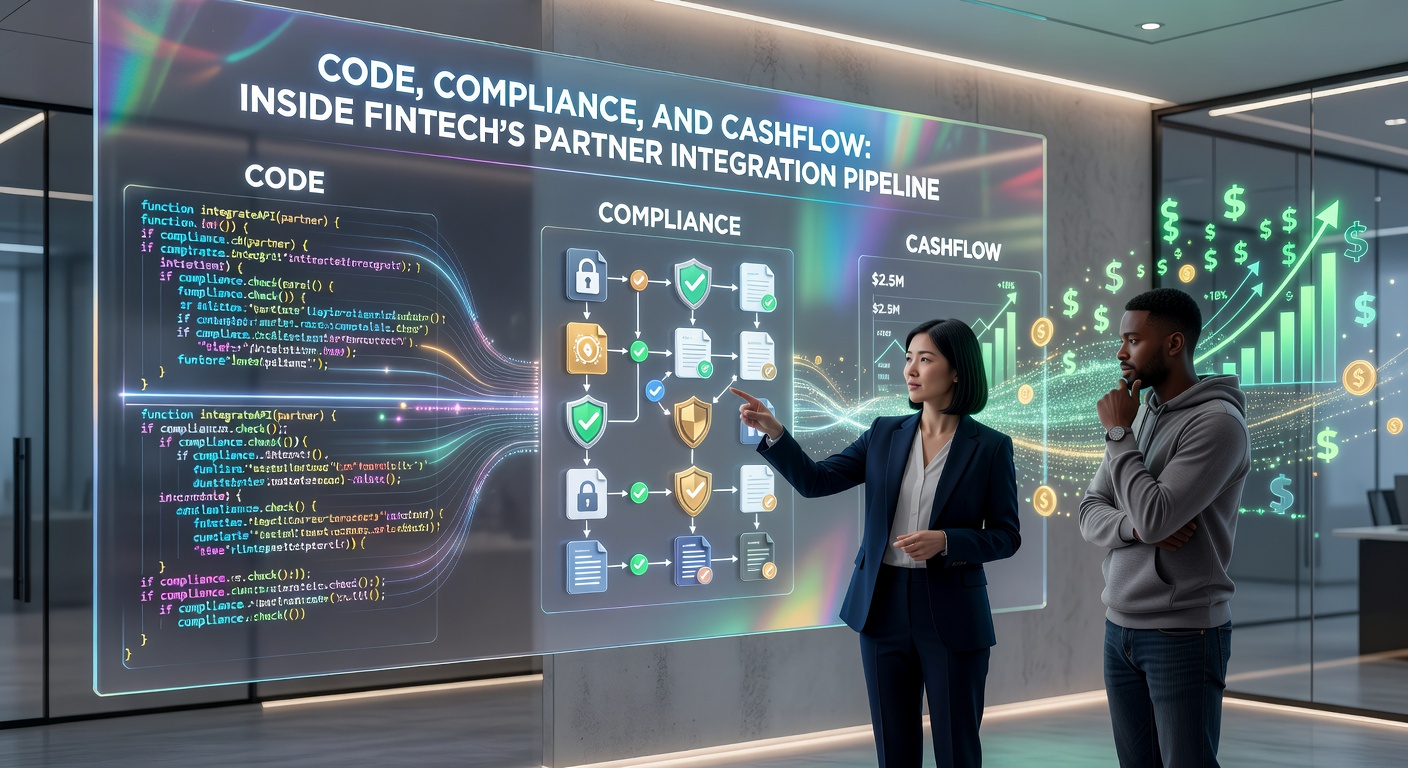
Code, Compliance, and Cashflow: Inside Fintech's Partner Integration Pipeline
The Backbone of Fintech Partnerships
Fintech companies build their ecosystems through partner integrations, where seamless connections between payment processors, banks, and software platforms drive everything from transactions to user experiences; yet, experts point out that success hinges on balancing code quality, regulatory compliance, and efficient cashflow management. Data from industry reports reveals that over 70% of fintech partnerships face delays due to integration bottlenecks, according to a 2025 study by the Finextra Research Institute, which underscores how these three pillars—code, compliance, and cashflow—form the core of any reliable pipeline. Observers note that without tight coordination, even the most innovative fintech solutions falter, leaving revenue streams vulnerable and users frustrated.
Take one payments startup that partnered with a major bank in early 2025; engineers spent months debugging APIs because compliance teams flagged mismatched data protocols, while cashflow projections shifted as integration timelines stretched. That's where the rubber meets the road in fintech's partner integration pipeline—a structured process that starts with technical handshakes and ends with monetized flows.
Cracking the Code: Technical Integration Realities
Developers dive into API specifications first, mapping endpoints for real-time data exchange between fintech apps and partner systems; but here's the thing, legacy infrastructure at traditional banks often clashes with modern microservices, forcing custom middleware that adds weeks to deployment. Research from the Office of the Superintendent of Financial Institutions (OSFI) in Canada highlights how 60% of integration failures stem from incompatible codebases, with secure tokenization and webhook handling proving particularly tricky since they must handle high-volume transactions without downtime.
And while open banking standards like PSD2 in Europe pave the way for standardized APIs, fintechs still customize integrations for niche partners—think embedding fraud detection modules or syncing ledger updates—which demands rigorous testing in sandbox environments. People who've navigated this often discover that containerization tools like Docker streamline deployments, cutting integration time by up to 40%, as one case study from a U.S. neobank revealed after linking with regional credit unions.
Now, security layers complicate matters further; encryption protocols such as OAuth 2.0 and JWT tokens ensure data integrity, but misconfigurations lead to breaches that halt pipelines entirely. Experts have observed patterns where fintechs prioritize scalable code from day one, using GraphQL for flexible queries instead of rigid REST calls, which keeps the pipeline agile as partner volumes grow.
Navigating Compliance: The Regulatory Maze
Compliance officers step in early, scrutinizing every line of code against frameworks like PCI DSS for payments or AML directives for fund tracking; turns out, non-compliance risks fines exceeding millions, with data from the U.S. Financial Crimes Enforcement Network (FinCEN) showing a 25% uptick in enforcement actions against fintech integrators in 2025 alone. Regulators demand audit trails for every transaction touchpoint, so pipelines incorporate KYC verification hooks that pull from partner databases while respecting GDPR data minimization rules in the EU.
But it's not just about ticking boxes; cross-border integrations trigger layered checks, where Australia's ASIC mandates specific reporting for cross-jurisdictional flows, and fintechs respond by building modular compliance engines that adapt to regional variances. One researcher who analyzed 50 partnerships noted how automated regtech tools flag issues pre-deployment, reducing manual reviews by half and keeping timelines on track.

What's interesting is the rise of AI-driven compliance monitoring by April 2026, as projections from industry analysts indicate tools that predict regulatory shifts based on global trends, helping fintechs stay ahead without constant overhauls. Those who've studied this know that integrating compliance as code—treating regs like version-controlled features—transforms the pipeline from a bottleneck into a competitive edge.
Cashflow at the Core: Monetizing the Pipeline
Cashflow optimization caps the integration trifecta, where settled funds from partners fuel fintech operations; delays here ripple outward, with treasury teams tracking settlement cycles that vary from T+0 for instant payments to T+2 for ACH rails. Figures reveal that efficient pipelines boost working capital by 30%, per a report from the European Fintech Association, since real-time reconciliation APIs minimize float times and unlock revenue shares from transaction volumes.
So, fintechs embed revenue models early—think tiered fees per API call or white-label margins—while forecasting cash inflows against integration milestones. A case where a digital wallet provider synced with e-commerce gateways showed how dynamic pricing engines adjusted for peak loads, stabilizing cashflow even during holiday surges. Yet, volatility hits when partners impose hold periods, prompting fintechs to layer in liquidity bridges like virtual accounts that pool funds across integrations.
Here's where it gets interesting: blockchain ledgers for cross-partner settlements cut intermediaries, accelerating cashflow in ways traditional rails can't match; observers note pilots in Asia-Pacific regions achieving 24/7 availability, which fintechs now replicate globally. And by April 2026, with ISO 20022 adoption nearing completion in major markets, standardized messaging promises even smoother fund routing, as early adopters report 15% faster payouts.
teh Full Pipeline in Action: Stages and Strategies
Partner integration unfolds in phases—discovery, where fintechs assess partner APIs and compliance postures; design, blending code blueprints with cashflow projections; build, iterating through dev-staging-prod cycles; and go-live, with monitoring dashboards tracking uptime and throughput. But smooth sailing demands orchestration tools like Apache Airflow, which sequence tasks across teams, preventing silos that plague 40% of projects, data indicates.
Take a mid-sized lending platform that integrated with five banks over six months; by prioritizing modular micro-integrations, they rolled out features incrementally, maintaining cashflow from partial launches. People often find that SLAs with partners—defining latency thresholds and dispute resolution—lock in reliability, while post-launch analytics refine the pipeline for scale.
Challenges persist, though; scalability tests reveal bottlenecks under load, so fintechs simulate Black Friday volumes early. That's the writing on the wall: proactive strategies like CI/CD pipelines fused with compliance gates ensure code deploys only when cashflow models align.
Emerging Trends Shaping Tomorrow's Pipeline
Embedded finance accelerates integrations, where non-banks like retailers plug in fintech modules via low-code platforms; research shows this slashes setup from months to days. AI agents now automate code generation for partner specs, while predictive compliance scans flag risks pre-commit.
And cashflow innovations like programmable payments via smart contracts promise granular control, with trials in the U.S. demonstrating fee auto-splits at transaction speed. By April 2026, experts anticipate widespread RTP networks expanding the pipeline's reach, as regulatory greenlights from bodies like the Federal Reserve pave the way for ubiquitous instant settlements.
One study revealed how fintech consortia share integration templates, cutting redundant work and amplifying collective cashflow; it's not rocket science, but collaboration turns individual pipelines into industry standards.
Wrapping Up the Integration Trifecta
Code lays the foundation, compliance safeguards the structure, and cashflow powers the engine in fintech's partner integration pipeline; master these, and partnerships thrive amid growing complexity. Data consistently shows that firms excelling here capture 2-3x more market share, as seamless flows retain users and attract volume. Those navigating this terrain emphasize iterative refinement—testing, learning, scaling—which keeps operations resilient. In the end, the pipeline isn't static; it's a living system evolving with tech and regs, ready for whatever comes next.