Insights from Real-World Integrations Show How Security Protocols and Pricing Structures Shape Earnings in Cross-Border Partner Networks
Viktor Beck · Aug 5, 2026
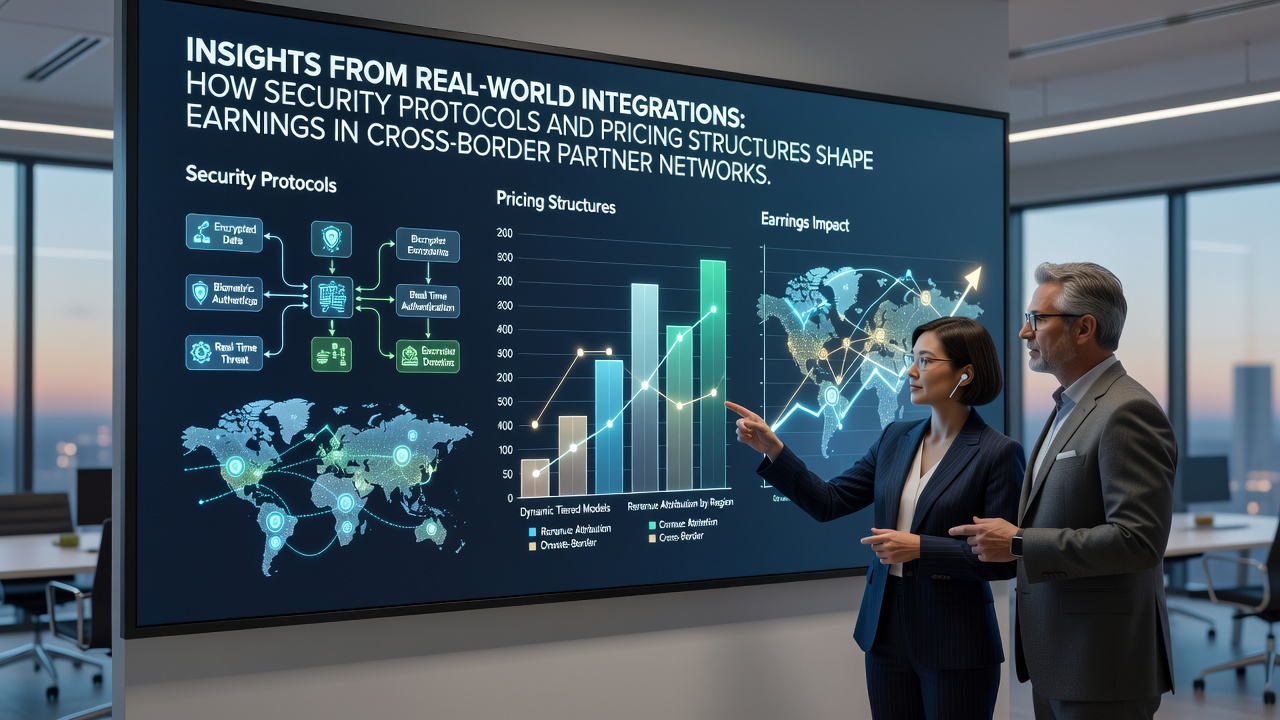
Insights from Real-World Integrations Show How Security Protocols and Pricing Structures Shape Earnings in Cross-Border Partner Networks
Real-world integrations across global partner networks reveal consistent patterns where security protocols intersect with pricing structures to determine earnings distribution among participants. Data from multiple cross-border implementations indicate that authentication standards, encryption requirements, and audit mechanisms directly influence the cost base that partners must absorb before revenue splits occur. Observers note that these factors create measurable variations in net earnings depending on the compliance level each network segment maintains.
Security Protocols in Integrated Networks
Security protocols such as multi-factor authentication chains and end-to-end encryption layers add operational overhead that appears in transaction cost calculations. Studies released by the Bank for International Settlements show that networks enforcing advanced verification steps experience processing cost increases ranging from 12 to 18 percent compared with baseline setups. Those added costs then factor into pricing negotiations between originating and receiving partners, shifting the percentage allocated to each side. Researchers tracking integrations completed through mid-2026 documented cases where stricter protocol adoption correlated with reduced earnings shares for smaller regional partners unless offset by volume-based adjustments.
Additional layers including real-time fraud monitoring and certificate management further shape these outcomes. Partners who integrate continuous monitoring tools often report longer settlement cycles, which delay revenue recognition and affect cash flow timing within the network. Evidence from several transnational projects indicates that these delays prompt adjustments in pricing formulas to compensate downstream participants for holding periods that extend beyond standard windows.
Pricing Structures and Their Interaction with Security
Pricing structures in cross-border partner networks typically combine fixed fees, percentage-based commissions, and tiered volume discounts. When security requirements rise, fixed fees frequently increase to cover certification and audit expenses while percentage commissions may compress to maintain overall competitiveness. Figures released in August 2026 by the Federal Reserve highlighted that networks incorporating enhanced security certifications saw average commission rates drop by 1.8 percentage points over the preceding twelve months, even as total transaction volumes grew. This compression occurs because upstream partners seek to offset protocol-related costs without raising end-user prices beyond market tolerance.

Those who've examined integration data observe that tiered pricing models adapt differently under security pressure. Higher-security tiers command premium pricing that benefits partners capable of meeting certification thresholds, yet lower tiers face margin pressure when they must route traffic through more secure gateways. One integration study covering European and Asia-Pacific corridors found that partners operating at the middle security tier retained 7 to 11 percent less revenue after protocol upgrades compared with the prior year, prompting several networks to introduce hybrid pricing that blends security surcharges with volume rebates.
Patterns from Ongoing Integrations
Cross-border integrations completed between 2024 and 2026 illustrate how these dynamics play out in practice. Networks that aligned security protocols early in the onboarding process achieved more stable earnings splits because pricing adjustments could be modeled before launch. In contrast, partners who retrofitted security measures after initial pricing agreements reported renegotiations that reduced their share by an average of 4.5 percent to accommodate new compliance costs. Data indicates that documentation quality and audit frequency also influence these renegotiations, with thorough records enabling faster consensus on revised fee structures.
Regional variations add another dimension. Networks spanning North American and Latin American corridors tend to apply security-driven surcharges more explicitly in pricing schedules, whereas Asia-Pacific arrangements often embed those costs within broader volume discounts. Such differences produce divergent earnings outcomes even when the underlying protocols remain comparable. Analysts tracking these patterns note that participants who standardize protocol documentation across regions experience fewer disputes over cost allocation during earnings reviews.
Conclusion
Integrations continue to demonstrate that security protocols and pricing structures function as interconnected variables rather than independent factors. As networks expand and regulatory expectations evolve, the allocation of earnings will remain tied to the specific ways each partner implements verification standards and negotiates fee adjustments. Continued monitoring of these relationships provides clearer visibility into how future cross-border arrangements will distribute returns among participants.