The Interplay of Verification Requirements and Payout Structures Among Worldwide Merchant Alliance Participants
Theo Brooks · Aug 19, 2026
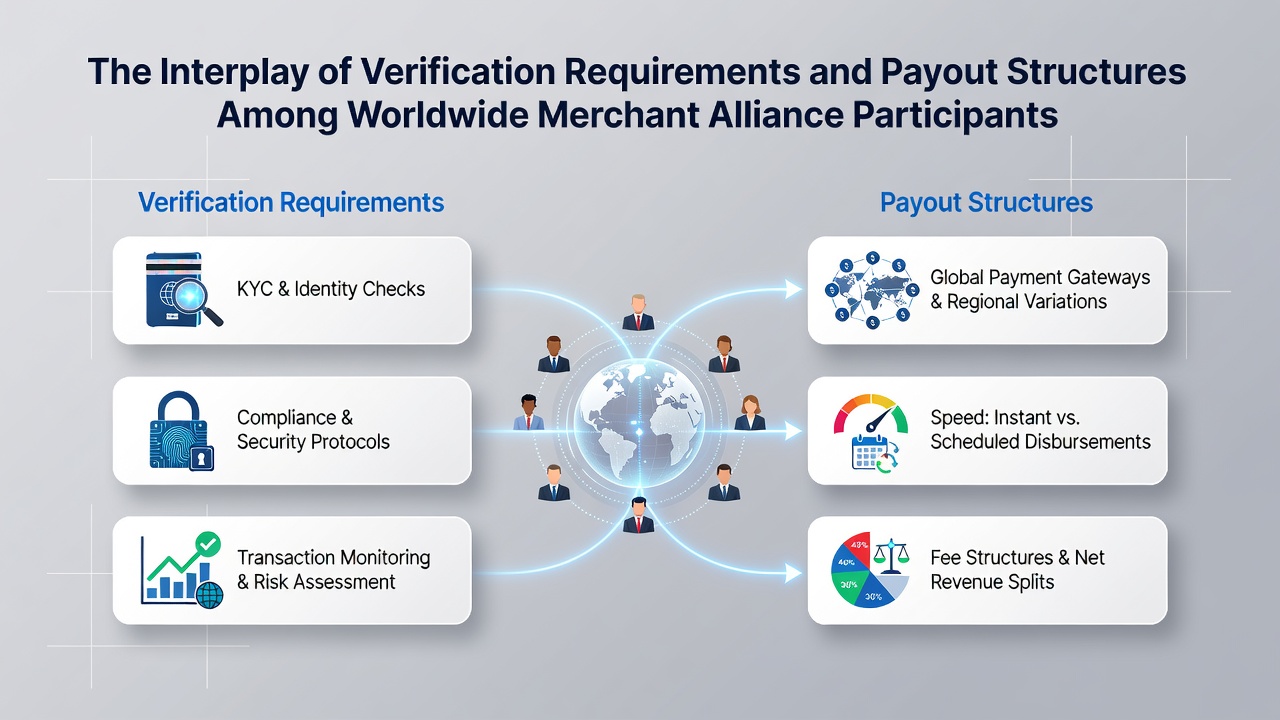
The Interplay of Verification Requirements and Payout Structures Among Worldwide Merchant Alliance Participants
Verification requirements in worldwide merchant alliances shape payout structures through layered compliance checks that determine release schedules, fee tiers, and eligibility thresholds. Data from cross-border payment networks indicate that stricter identity validation and transaction monitoring often extend settlement periods while adjusting revenue splits among participants.
Core Verification Layers in Merchant Networks
Merchant alliances operating across multiple jurisdictions implement verification protocols that include document authentication, beneficial ownership checks, and ongoing transaction screening. These steps connect directly to payout mechanics because incomplete verification blocks fund releases until resolution occurs. Observers note that alliances coordinate these processes through shared platforms where participants upload records once, yet regional rules still dictate additional reviews before payouts clear.
Regulatory bodies in different regions set varying standards that alliances must reconcile. The European Central Bank outlines requirements under payment services frameworks that emphasize real-time monitoring, whereas the Monetary Authority of Singapore applies risk-based approaches that scale verification intensity according to merchant category. Such differences create tiered payout models where merchants passing enhanced checks receive faster access to funds and lower reserve withholdings.
How Verification Influences Payout Timing and Allocation
Payout structures within these alliances typically divide into immediate, scheduled, and reserve-held categories, each tied to verification status. Merchants completing full validation cycles in August 2026 gained eligibility for reduced hold periods under updated alliance guidelines that took effect that month. Research indicates that alliances using automated verification tools shortened average settlement times by 18 percent compared with manual review systems, according to industry reports tracking transaction volumes through 2025.
Allocation formulas adjust when verification flags arise. High-risk classifications trigger higher reserve percentages that alliances deduct from gross volumes before distribution. Those who've studied transaction ledgers find that merchants in high-scrutiny categories often see 5 to 15 percent of receivables held for extended periods, while verified low-risk participants receive full payouts within standard windows. And yet alliances maintain these differentials because they align with external compliance obligations that protect the network as a whole.
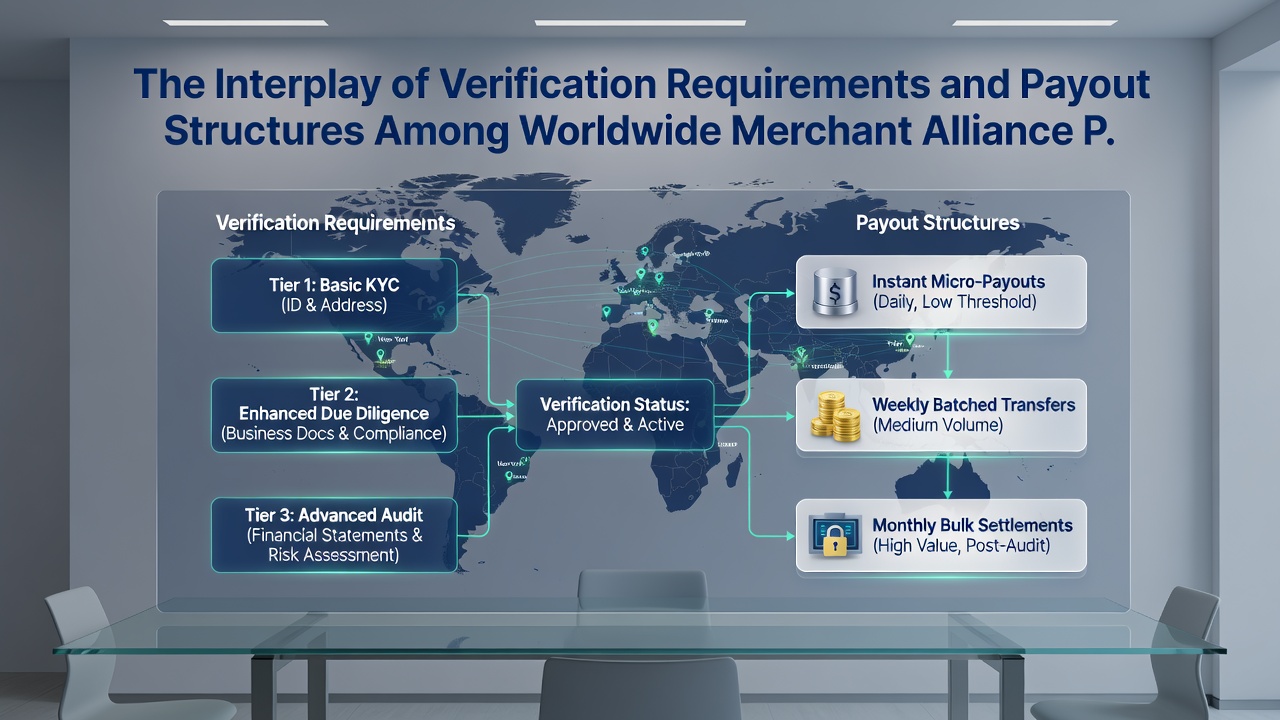
Regional Variations and Alliance Responses
Alliances serving participants in North America, Europe, and Asia-Pacific regions adapt verification thresholds to local mandates while preserving unified payout ledgers. Canadian authorities through the Financial Transactions and Reports Analysis Centre require periodic re-verification that alliances schedule alongside quarterly payout reviews. In Australia, the Australian Securities and Investments Commission enforces record-keeping standards that influence how alliances calculate and release affiliate shares. These regional mandates feed into centralized systems that recalculate participant earnings based on updated compliance scores.
One study revealed that alliances integrating verification data with payout engines reduced dispute rates by aligning release dates with completed audit cycles. Participants operating under multiple frameworks often discover that early submission of verification materials accelerates access to higher payout bands. The ball remains in each merchant's court to maintain current documentation, since lapses immediately shift them into slower payout categories.
Technology Integration and Data Flows
Alliance platforms route verification results into payout calculation engines through secure APIs that update merchant profiles in real time. When new documentation arrives, the system recalibrates risk scores and adjusts upcoming distributions without manual intervention. Figures from network operators show that automated linkages between verification databases and settlement modules cut administrative costs while maintaining audit trails required by regulators.
What's significant is how these integrations handle exceptions. Merchants flagged during routine screening enter review queues that pause scheduled payouts until clearance. Alliances document each step so that profit divisions reflect actual compliance status rather than assumed categories. Researchers discovered that transparent logging of verification events correlates with higher participant retention because merchants understand exactly why certain payouts are delayed or reduced.
Conclusion
Verification requirements and payout structures in worldwide merchant alliances remain tightly coupled through shared data systems and regulatory alignments. Alliances continue to refine these connections as new standards emerge, with updates in August 2026 illustrating how compliance milestones directly alter settlement outcomes. Participants who track verification status alongside payout schedules gain clearer visibility into expected cash flows across global operations.