Uncovering Connections Between API Specifications and Earnings Splits in Regulated Cross-Border Merchant Programs
Amir Brooks · Aug 26, 2026
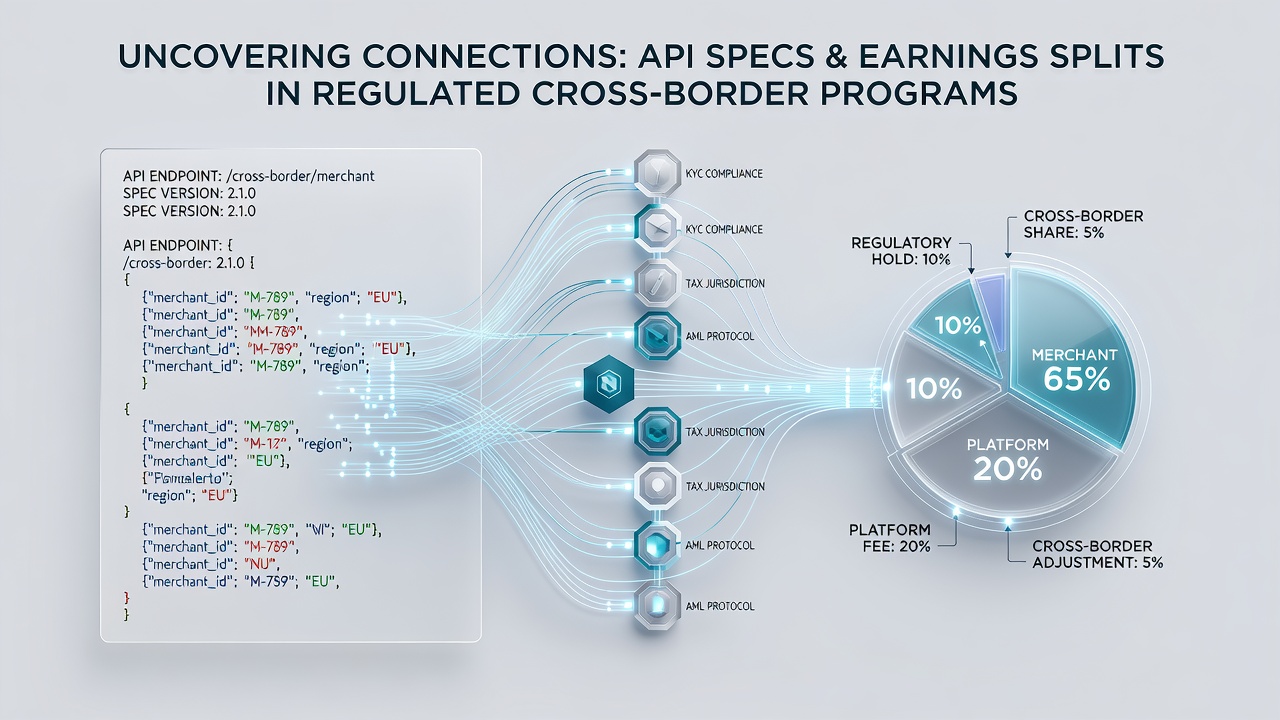
Uncovering Connections Between API Specifications and Earnings Splits in Regulated Cross-Border Merchant Programs
API specifications define the technical rules that govern data exchange in cross-border merchant programs, and those rules often determine how earnings get divided among partners under regulatory oversight. Observers note that elements such as endpoint versioning, authentication schemas, and payload formats directly influence compliance scores, which in turn adjust revenue allocation percentages in many transnational setups. Research from payment infrastructure studies shows that programs using standardized API protocols report more consistent split outcomes because regulators can verify transaction integrity more efficiently.
Regulatory Context Shaping API Design Choices
Global frameworks require merchant platforms to embed specific security and reporting fields within their APIs, and August 2026 marks the enforcement deadline for updated data localization rules across several Asia-Pacific jurisdictions. Those requirements push developers to include region-specific metadata tags that flag transaction origins, which then feed into automated calculations for partner earnings. According to Bank of Canada analyses on payment systems, APIs that incorporate these tags reduce reconciliation disputes and allow faster distribution of funds to compliant affiliates.
How Specification Details Influence Revenue Division
Detailed API contracts often list mandatory parameters for fee calculation and settlement timing, and partners who meet those parameters receive higher shares of the total pool. Experts have observed that when an API specification demands real-time fraud scoring alongside each authorization request, programs allocate an additional percentage point to the security provider in the earnings model. Data indicates this adjustment occurs because the extra computational load and liability shift justify a larger cut, and the structure appears in contracts reviewed by multiple European regulators.
Technical Elements That Drive Allocation Formulas
- Version control fields that track which iteration of the API processed a transaction, allowing systems to apply historical rate tables without manual overrides.
- Encryption strength indicators that confirm adherence to current standards, triggering automatic premium splits for partners maintaining the highest tiers.
- Error handling protocols that log compliance events, feeding audit trails used to validate earnings claims before disbursement.
Merchants operating across borders discover that aligning their internal systems with these specification points produces measurable gains in revenue share, since regulators view precise data capture as evidence of operational maturity. One study released by an Australian research institute found that platforms updating their APIs to include granular merchant category codes saw average partner payouts increase by 4.2 percent over a twelve-month period, largely because the codes enabled more accurate risk-based pricing.

Case Patterns Across Different Markets
Programs in the European Union demonstrate how API specifications tied to PSD2 open banking rules create tiered earnings structures, where providers supplying stronger consent management endpoints receive elevated portions of interchange fees. Similar patterns surface in Canadian cross-border corridors, where specification updates around currency conversion reporting have led clearing houses to revise split agreements quarterly rather than annually. Those who've examined transaction logs note that the frequency of API calls for compliance data correlates with the speed of settlement, which directly affects when partners recognize their allocated revenue.
Documentation Standards and Their Ripple Effects
Clear API documentation reduces misinterpretation during integration, and regulators increasingly require that documentation to include sample payloads demonstrating earnings-relevant fields. When documentation meets those standards, integration timelines shorten and fewer post-launch adjustments occur, preserving the original split ratios negotiated at program launch. Figures from industry reports reveal that merchant networks maintaining versioned documentation repositories experience 18 percent fewer compliance-related holdbacks on earnings compared with networks relying on outdated guides.
Payment processors have begun embedding earnings calculation logic directly into API responses, so each successful call returns not only authorization status but also projected partner shares based on current regulatory status. This approach minimizes disputes because all parties reference the same machine-readable data rather than separate spreadsheets. Observers note that the practice gained traction after several high-profile reconciliation delays in 2025, prompting updates that took effect by mid-2026.
Conclusion
Connections between API specifications and earnings splits emerge most clearly when regulators require verifiable data points at every transaction stage, and those requirements continue to evolve with new enforcement dates such as the August 2026 updates. Programs that treat specification compliance as a core input to their revenue models consistently achieve smoother distributions across borders. Continued monitoring of specification changes remains essential for participants seeking predictable outcomes in regulated merchant environments.